Waterfront
Building on Lake Conroe: What Waterfront Owners Should Know

Quick answer
Building on Lake Conroe means coordinating two sets of rules: the San Jacinto River Authority regulates docks, bulkheads and other shoreline structures, while Montgomery County or the local city reviews the home itself. Plan for flood elevations above the lake’s normal pool, erosion-resistant bulkheads, septic setbacks and a layout that captures views without overheating.
Who regulates construction on Lake Conroe?
Lake Conroe is a reservoir operated by the San Jacinto River Authority (SJRA). Docks, boathouses, bulkheads and other shoreline improvements require SJRA permits under its lake regulations. The home itself is permitted by the city or by Montgomery County in unincorporated areas, and many communities add HOA review on top.
How high should a lake home sit?
The lake’s normal pool is about 201 feet above mean sea level, but major storms can push water well above that level. We check FEMA flood maps, survey elevations and community requirements so the finished floor, mechanical equipment and electrical service sit safely above potential high water.
What should you know about bulkheads?
Bulkheads protect your shoreline from wave and boat-wake erosion. Common materials include vinyl sheet piling, steel and concrete, each with different costs and lifespans. Proper tiebacks, filter fabric and drainage behind the wall prevent soil loss and settlement.
Can you use a septic system on the lake?
Many lake properties rely on on-site sewage facilities. Montgomery County regulations set system types and setbacks, including from the water, which influence where the house can sit. We design the site plan around these requirements from the start.
How do you design for views and comfort?
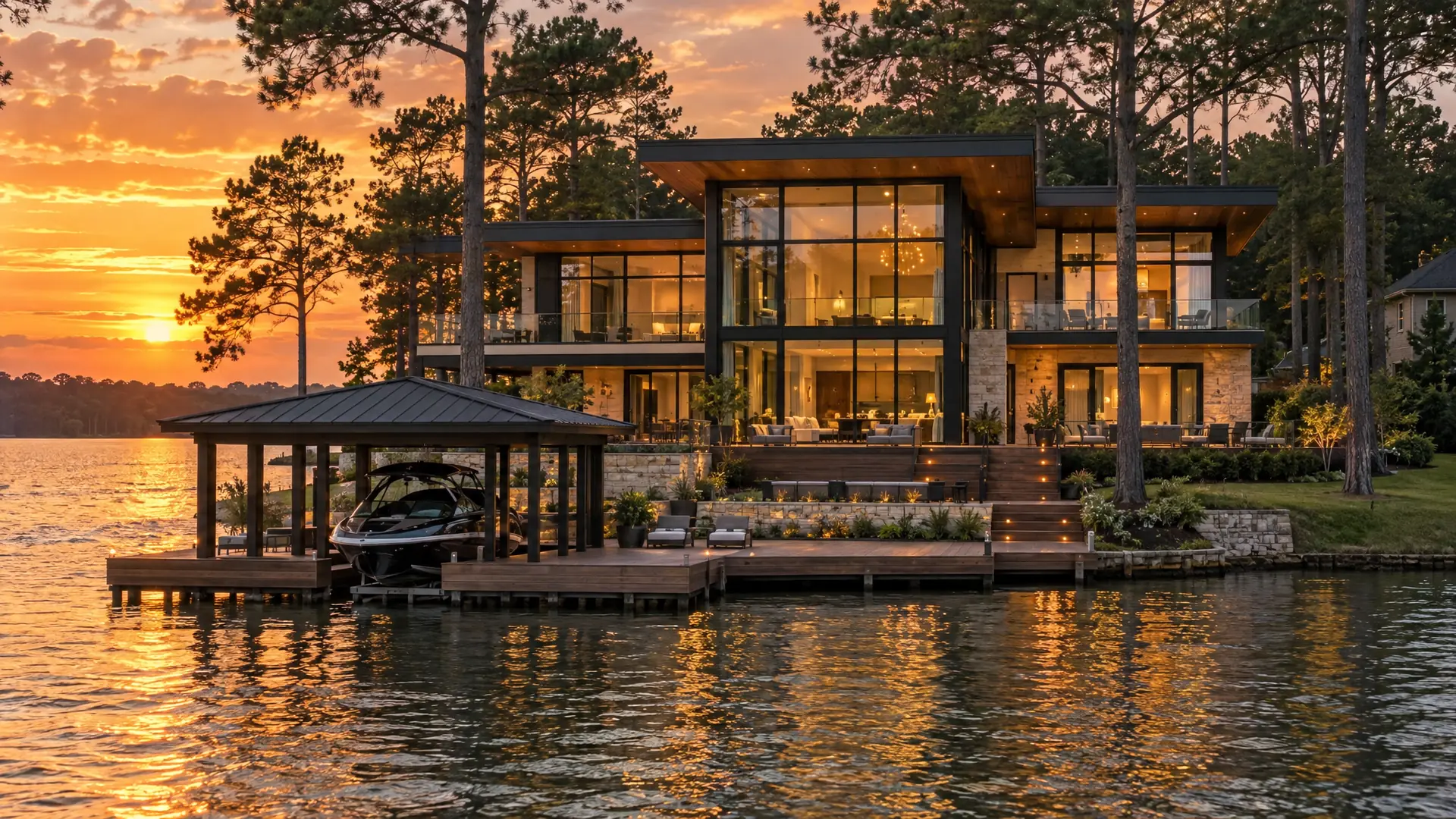
We orient main living areas, the primary suite and outdoor spaces toward the water, use deep overhangs and high-performance glass to tame west-facing afternoon sun and plan covered outdoor rooms that step down to the shoreline.